

Description and characteristics
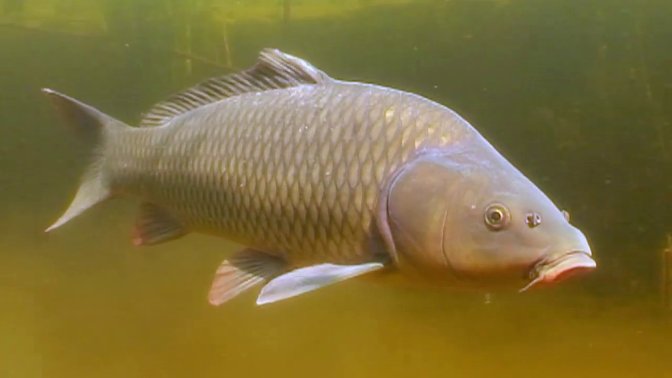
The common carp is a freshwater fish, recognised by its massive, scaly body, covered with large, shiny scales. It can reach impressive sizes, some specimens exceeding 1 metre in length and 20 kg in weight. Its colour varies from greyish-green to brownish, depending on the habitat. A distinctive trait is its prominent mouth, equipped with four short barbels, which help it locate food on the bottom of the water.
Habitat and distribution
In the Danube Delta, the common carp populates a variety of habitats, including lakes, river branches, flooded areas and canals. It prefers slow or still waters, with sandy or muddy bottoms, rich in aquatic vegetation. This species is highly adaptable, withstanding large variations in temperature and water quality, which explains its wide presence in the Delta.
Diet and behaviour
The common carp is an omnivorous fish, feeding on both plant matter and aquatic invertebrates, insect larvae and organic debris. It uses its barbels to detect food on the bottom of the water, where it often digs and stirs up the sediments. It is known for its gregarious behaviour, forming groups especially during the breeding periods.
Reproduction
The breeding period of the common carp takes place in spring and early summer, when the water temperature reaches 18-20°C. The female lays between 100,000 and 1,000,000 eggs on vegetation-covered surfaces, and the males fertilise them. The fry hatch after a few days, and survival depends on the environmental conditions and the availability of food.
Economic and ecological importance
The common carp has significant economic value, being one of the main commercial species of the Danube Delta. It is fished both for local consumption and for export, contributing to the economy of the communities in the area. In addition, it plays an important ecological role, maintaining the balance of aquatic ecosystems by regulating invertebrate populations and recycling nutrients.
Threats and conservation
Although the common carp is a resilient species, its populations are affected by water pollution, habitat destruction and overfishing. To ensure the sustainability of this resource, responsible management measures are needed, such as fishing regulation, protection of breeding areas and water quality monitoring.
Sport fishing for carp in the Danube Delta
The Danube Delta, with its idyllic landscapes and rich biodiversity, is an ideal place for sport fishing. The common carp (Cyprinus carpio) is one of the most sought-after species by sport anglers, due to its impressive sizes and the "adrenaline rush" it offers when caught. This activity is not just a hobby, but also a way to connect with nature and experience the beauty of the Delta.
Sport fishing: a tradition and a challenge
Sport fishing for carp is a practice that requires patience, skill and knowledge of the behaviour of this fish. Unlike commercial fishing, sport fishing aims to catch the fish for pleasure, followed by releasing it back into the water (catch and release), although some specimens may be kept for consumption, respecting the regulations in force.
Techniques and equipment
Float fishing: this method is popular in areas with calm water, such as the lakes and canals of the Delta. Anglers use floats to keep the bait at the desired depth. The bait can be varied: corn, groundbait, worms or special carp baits.
Bottom fishing: this technique is effective in areas with greater depths or weak currents. Weights are used to keep the bait on the bottom, where the carp usually seeks its food. The baits can be dough balls, cereal grains or artificial baits.
Feeder fishing: a modern method that combines elements of bottom fishing and float fishing. A special mesh (feeder) is used to distribute the bait in the water, attracting the carp to the fishing area.
Equipment: for carp fishing, it is recommended to use a sturdy rod, a long and flexible rod, and high-quality lines. The carp is a powerful fish, and the fight with it can be intense, so the equipment must be adequate. For the Danube and its branches, the presence of the water current as well as the tree roots adds an extra challenge for which you must necessarily be prepared, both mentally and materially.
Fishing locations in the Danube Delta
The Danube Delta offers a multitude of ideal locations for carp fishing:
Lacul Roșu and Lacul Golovița: these lakes are known for their dense carp populations.
The Danube branches: areas with calm water and abundant vegetation are preferred by the carp.
Canals and flooded areas: these places offer shelter and food for the carp, being excellent fishing spots.
Regulations and etiquette
Sport fishing in the Danube Delta is regulated to protect natural resources and ensure sustainability. It is important to respect the following rules:
Fishing permit: it is mandatory to obtain a fishing permit, issued by ARBDD.
Seasons and limits: there are periods when fishing is prohibited or limited to allow fish reproduction. Catch limits are also established.
Releasing the fish: the "catch and release" practice is encouraged, especially for large specimens, to maintain healthy populations.
The experience of carp fishing in the Danube Delta
Carp fishing in the Danube Delta is more than a simple sporting activity; it is a complete experience that connects you with nature. The quiet mornings, the stunning landscapes and the sensation of catching an impressive carp make this practice an unforgettable adventure. Anglers can also benefit from local guides, who offer valuable advice and help them find the best locations.
Sport/recreational carp fishing is a much broader subject and hard to exhaust in a single article like this; we have seen, for example, YouTube posts from anglers from other parts of the world who used as bait an improvised dough made on the spot from wheat flour and biscuits.
On the market there is a multitude of carp baits, including the traditional polenta for carp but also boilies of all kinds. The choice will be yours depending on the season and the place where you fish (the local specifics). Regarding the local specifics, it is good to also take into account the tips offered by locals or by acquaintances who have fished in the area before.
Below you have a YouTube channel from which you can learn more from the experience of other carp anglers.
Conclusion
The common carp is an essential element of the biodiversity of the Danube Delta, representing both a natural treasure and a vital economic resource for local communities. Protecting this species and its habitat is essential for maintaining the health of the ecosystem and regional traditions.